
Picture a patient calling your clinic about an implant. The receptionist is polite, answers the question about price, and says “feel free to call us back when you decide”. No appointment is proposed. The patient never calls back. Nobody in the clinic will ever know this call happened, or what it cost.
Most clinic owners invest in marketing to bring in new patients. Far fewer look at what happens to those patients in the first two minutes, on the phone. Yet reception is the clinic’s first sales team, and in many clinics it is the only team whose results nobody measures.
The owner knows the revenue, not the reasons
A typical monthly report tells you how many patients came in and how much they paid. It does not tell you how many called and did not come, or which receptionist turns calls into appointments and which one does not. So the clinic runs on anecdotes: “the phones were quiet this month”, “patients are price-sensitive”, “it is the season”.
When you start measuring, a different picture appears:
- The same calls bring very different results. Two receptionists handling similar calls can convert them at very different rates. Nobody notices, because nobody compares.
- Treatment plans stay unsigned. Patients “think about it”, and nobody follows up effectively.
- Discounts are given to friends and important people, and the price list quietly erodes.
Small improvements, big money
The numbers are larger than most owners expect. Take a clinic with about €1.5M in annual revenue. If 5 more patients out of 100 accept their treatment plan, that is about €95,000 more a year. Five more points in booked appointments add about €86,000. (Illustrative figures. In a diagnostic, we use the clinic’s own data.)
No new marketing budget, no new equipment. The same calls, the same patients, handled better.
What changes when every call is measured
With RepsMate working inside iStoma, every reception call is transcribed and scored from 1 to 10 against a recommended eight-step sales script: greeting, introduction, understanding the need, offering the service, identifying the objection, handling it, booking the appointment and closing. The score is linked to appointments and revenue, so the owner sees, on desktop or phone, who converts and why.
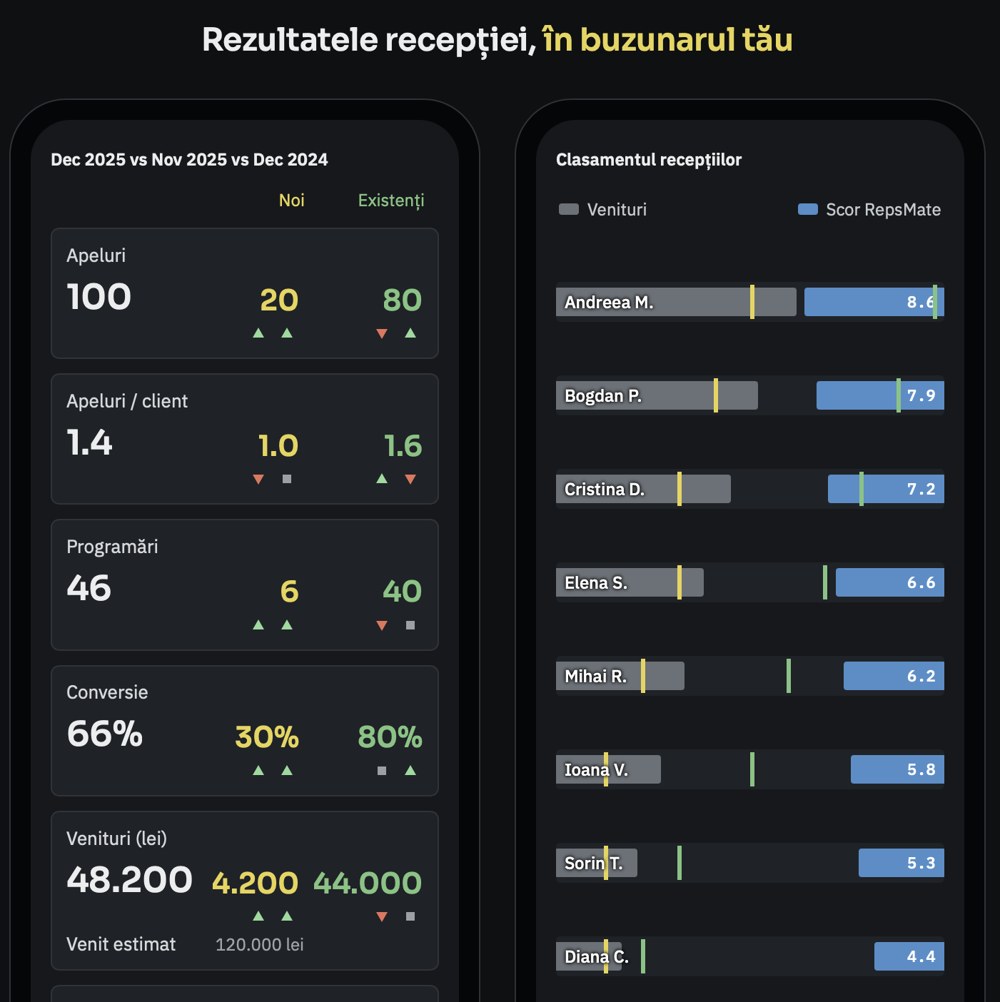
Measurement alone is not the point. It makes three things possible:
- The best call becomes the standard. Your best receptionist’s approach becomes the script everyone follows.
- Coaching happens on real calls, not on generic training slides.
- The treatment plan is sold in tandem. The doctor explains the diagnosis and options in plain language. A Key Patient Account then explains stages, costs and payment calmly, and follows up every pending plan.
In the private clinics we have worked with, this approach has led to up to 80% of patient calls turned into appointments, and, combined with performance management across the clinic, up to +20% revenue and up to +50% profit.
Where to start this month
You do not need a software project to begin. Three questions, answered honestly, will already show you where money is lost:
- How many calls did the clinic receive last month, and how many became appointments? If nobody can answer, that is the first finding.
- How many treatment plans are waiting for a decision right now, and who follows them up?
- Which discounts were given last month, by whom, and why?
If the answers are uncomfortable, you are not alone. Most clinics have never looked. The good news is that this is one of the fastest places to find profit, usually before spending anything on marketing.
The bigger picture
The front desk is one of the twelve checks in the Business MRI, a four-week diagnostic of the clinic as a business: from vision, prices and processes to patient relations, data and automated reports. Before any treatment, a good doctor runs the scan. A clinic deserves the same.
Read more about how we work on the front desk and treatment plans, on monthly reporting, or get in touch: bring last year’s revenue, and you will leave with a first view of where your clinic loses money.
Recent Posts
The rise of the Chief Revenue Officer (CRO) & Chief Digital Officer (CDO) in the wake of the post-pandemic business transformation
Agile for Core Business